

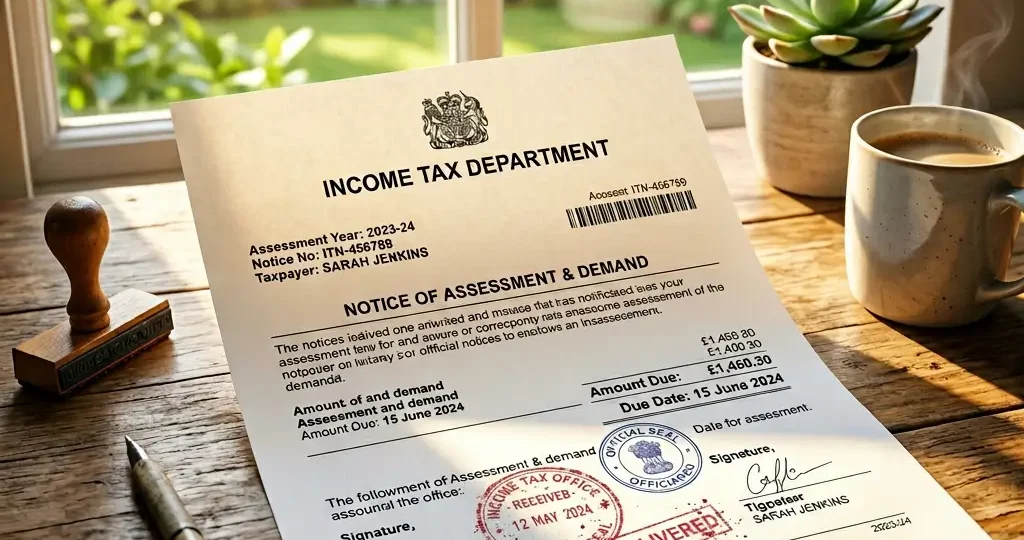
Types of IT Notices, Step-by-Step Response Guide, and How to Avoid Common Mistakes:
Receiving an Income Tax notice can be stressful for individuals and businesses alike. For many taxpayers, a notice from the Income Tax Department creates panic, even when it is merely an intimation or a request for clarification. In reality, not all tax notices indicate wrongdoing or penalties. Some are simply system-generated communications to inform, verify, or correct information.
Understanding what an Income Tax notice means, why it is issued, and how to respond properly can help avoid unnecessary penalties, interest, and legal complications. This article explains the types of Income Tax notices, provides a step-by-step response guide, and highlights common mistakes to avoid.
What Is an Income Tax Notice?
An Income Tax notice is an official communication sent by the Income Tax Department of India to a taxpayer. It may be issued for various reasons, including:
• Mismatch in income or tax details
• Non-filing or late filing of returns
• Incorrect claims of deductions or exemptions
• High-value transactions
• Demand for additional tax
• Scrutiny or assessment proceedings
Notices are usually sent electronically through the Income Tax portal and by email or SMS. In most cases, taxpayers are given a specific time limit to respond.
Why Income Tax Notices Are Issued:
Income Tax notices are triggered mainly by:
• Data mismatch between return and Form 26AS/AIS/TIS
• Reporting errors
• Omission of income
• Excess refund claimed
• High-value bank transactions
• Investment inconsistencies
• Late or non-filing of returns
• System-based risk parameters
These notices help the department ensure compliance and accuracy in tax filings.
Types of Income Tax Notices
Income Tax notices can broadly be classified into three major categories:
- Intimation Notices
- Demand Notices
- Penalty Notices
Each serves a different purpose and requires a different response approach.
1. Intimation Notices
Intimation notices are usually issued under Section 143(1) after processing your Income Tax Return (ITR).
Purpose of Intimation Notices:
• To inform about tax calculation by the department
• To communicate refund amount
• To highlight mismatch or adjustment
• To demand additional tax, if any
Common Reasons:
• Mismatch in tax paid and tax claimed
• Incorrect deduction claims
• Arithmetical errors
• Disallowed exemptions
• Income not matching with AIS or Form 26AS
What It Means:
An intimation notice does not mean scrutiny. It is simply a processing result. However, it may contain a tax demand or adjustment which must be reviewed carefully.
2. Demand Notices
Demand notices are issued when the Income Tax Department determines that additional tax is payable by the taxpayer.
Purpose of Demand Notices:
• To collect unpaid tax
• To correct short payment
• To recover tax dues
Common Sections:
• Section 156 – Demand notice
• Section 143(1) – Demand after processing
• Section 143(3) – Demand after assessment
Reasons for Demand:
• Underreporting of income
• Excess refund received
• Disallowed deductions
• Mismatch in TDS/TCS
• Late filing interest
• Advance tax shortfall
Demand notices must be responded to within the specified time period.
3. Penalty Notices
Penalty notices are issued when the department believes that a violation of tax law has occurred.
Purpose of Penalty Notices:
• To impose monetary penalty
• To penalize concealment or misreporting
• To enforce compliance
Common Sections:
• Section 270A – Underreporting or misreporting
• Section 271AAC – Unexplained income
• Section 271AAB – Search cases
• Section 234F – Late filing
Reasons for Penalty:
• Non-filing of return
• Concealment of income
• False deduction claims
• Delay in compliance
• Non-response to notices
Penalty notices require a formal explanation or representation.
Step-by-Step Guide to Respond to an Income Tax Notice
Ignoring a tax notice can result in penalties, interest, and even prosecution in serious cases. Follow this structured approach to respond correctly.
Step 1: Read the Notice Carefully
Start by understanding:
• Section under which notice is issued
• Assessment year
• Nature of discrepancy
• Time limit for response
• Mode of reply
Never assume the reason. Many notices look complex but are simple clarifications.
Step 2: Verify Authenticity
Check whether the notice is genuine:
• Login to the Income Tax portal
• Verify notice under e-Proceedings
• Match Document Identification Number (DIN)
Never respond to unverified emails or physical notices without portal confirmation.
Step 3: Understand the Issue Raised
Determine whether the issue is related to:
• Income mismatch
• TDS mismatch
• Disallowed deduction
• Missing income
• High-value transaction
• Refund adjustment
• Late filing
Identify whether the department is correct or an error has occurred.
Step 4: Gather Supporting Documents
Collect all related documents:
• Bank statements
• Salary slips
• Investment proofs
• Form 26AS
• AIS and TIS
• Previous ITR
• Expense proofs
• Rent receipts
• Loan statements
Organized documentation is crucial for effective reply.
Step 5: Decide the Correct Response
Your response may fall under one of the following:
• Agree with the notice
• Partially agree
• Disagree with proper explanation
If you agree:
Pay the tax demand and respond accordingly.
If you disagree:
Prepare a written explanation with documentary proof.
Step 6: Respond Through the Income Tax Portal
Most notices require online response:
• Login to Income Tax portal
• Go to e-Proceedings or Pending Actions
• Select relevant notice
• Upload reply and documents
• Submit response
Never send physical replies unless specifically instructed.
Step 7: Track Response Status
After submission:
• Save acknowledgment
• Monitor portal status
• Check email/SMS updates
• Respond to follow-up notices if required
Do not assume closure without confirmation.
How to Avoid Common Mistakes While Responding
Mistakes in responding to tax notices can worsen the situation. The following errors should be avoided:
1. Ignoring the Notice
Ignoring notices leads to:
• Ex-parte assessment
• Penalty proceedings
• Bank account attachment
• Legal action
Always respond within deadline.
2. Paying Demand Without Verification
Sometimes demands are incorrect due to:
• TDS not reflecting
• Double taxation
• Data mismatch
Blindly paying may cause financial loss.
3. Submitting Incomplete Information
Partial or unclear responses lead to:
• Further notices
• Penalty
• Scrutiny escalation
Provide complete explanation with proof.
4. Missing Deadlines
Delayed replies result in:
• Loss of appeal rights
• Automatic demand confirmation
• Higher penalties
Mark calendar reminders.
5. Giving Wrong or Misleading Explanations
Incorrect statements can:
• Attract penalty
• Trigger scrutiny
• Create legal complications
Honesty and accuracy are essential.
6. Not Seeking Professional Help
Complex notices like scrutiny, reassessment, or penalty should not be handled casually. Professional guidance prevents errors and improves chances of resolution.
How to Prevent Income Tax Notices in the Future
Prevention is always better than cure. Tax notices can be minimized by:
• Filing returns on time
• Declaring all income
• Matching AIS and Form 26AS
• Avoiding false deductions
• Maintaining proper records
• Using correct ITR form
• Reporting high-value transactions
• Reconciling TDS and advance tax
• Consulting professionals regularly
Proper compliance reduces notice probability significantly.
Role of Tax Professionals in Notice Handling
Tax professionals help in:
• Drafting technical replies
• Representing before authorities
• Rectification filing
• Appeal filing
• Preventing penalties
• Interpreting law correctly
Their expertise ensures lawful and strategic response.
Conclusion
Income Tax notices are not always bad news. Many are routine communications meant to ensure accuracy and compliance. However, improper handling can lead to penalties, interest, and prolonged litigation.
Understanding the type of notice, responding correctly within time, and avoiding common mistakes are the keys to resolving tax notices smoothly. Taxpayers who maintain accurate records and comply proactively face fewer notices and faster resolutions.
Rather than panicking, taxpayers should approach notices systematically and professionally.
Yes. With digital data matching, notices are increasingly common and often automated.
No. Many notices are informational or for clarification.
No. Even intimation notices must be reviewed, especially if they contain demand or adjustment.
You should file a detailed reply with documentary proof or file rectification/appeal as applicable.
