

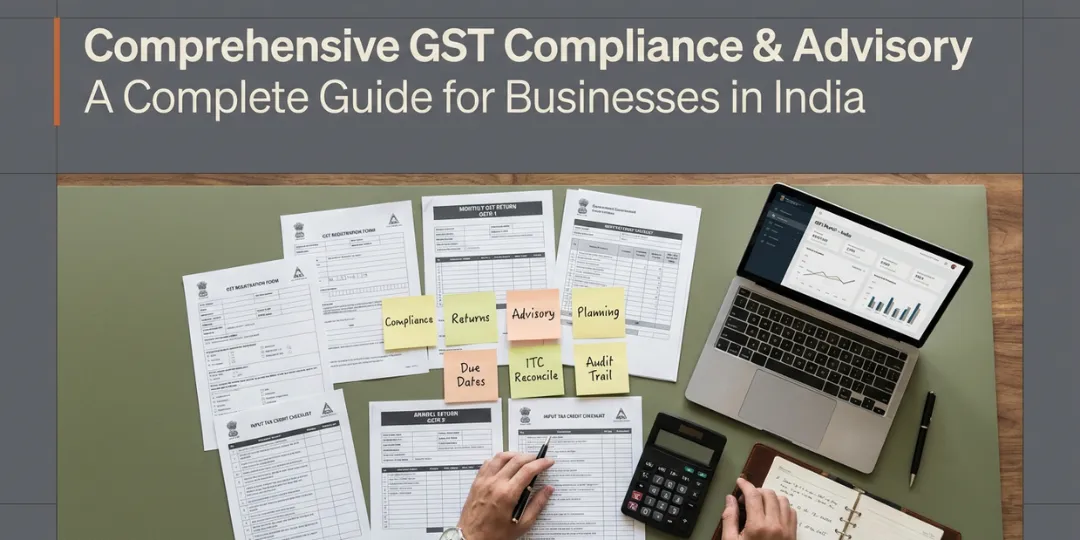
The Goods and Services Tax (GST) has transformed the Indian taxation system by unifying multiple indirect taxes under a single framework. While GST has simplified taxation at a macro level, compliance requirements remain complex, especially for small and medium businesses, startups, and growing enterprises. From registrations and return filings to audits and reconciliations, GST demands accuracy, timeliness, and constant monitoring of regulatory updates.
This is where comprehensive GST compliance and advisory services play a crucial role. Professional GST support not only ensures adherence to the law but also helps businesses reduce risks, optimize tax liability, and maintain smooth operations.
This detailed guide explains what GST compliance involves, why advisory services are essential, common challenges faced by businesses, and how professional assistance can help you stay compliant and confident.
Understanding GST Compliance in India
GST compliance refers to the set of statutory obligations that a registered taxpayer must fulfill under the GST Act. These obligations vary based on the nature of business, turnover, and type of registration but broadly include:
- GST registration and amendments
- Timely filing of GST returns
- Payment of GST liabilities
- Maintenance of records and documentation
- Responding to notices and assessments
- GST audit and reconciliation
Non-compliance can result in penalties, interest, cancellation of registration, and even legal action. Therefore, understanding and managing GST compliance is critical for every registered business.
What Is GST Advisory and Why It Matters
GST advisory goes beyond routine compliance. It focuses on strategic guidance to help businesses interpret GST laws correctly and apply them effectively. Advisory services assist in:
- Choosing the right GST registration type
- Understanding tax implications on transactions
- Structuring business operations for tax efficiency
- Handling complex GST issues and disputes
- Staying updated with frequent amendments and notifications
With GST laws evolving continuously, advisory support ensures that businesses make informed decisions and avoid costly mistakes.
Key Components of Comprehensive GST Compliance
1. GST REGISTRATION AND STRUCTURING
GST registration is the first and most crucial step in compliance. Businesses must determine whether registration is mandatory or voluntary and select the appropriate category.
Professional assistance helps with:
- Determining eligibility and threshold limits
- Selecting regular, composition, or special registration
- Accurate submission of documents
- Handling amendments such as address, business activity, or partner changes
Incorrect registration details can lead to compliance issues later, making expert guidance essential from the beginning.
2. GST RETURN FILING AND TIMELY COMPLIANCE
GST return filing is a recurring obligation and one of the most challenging aspects of compliance. Depending on the nature of business, returns may include:
- GSTR-1 (outward supplies)
- GSTR-3B (summary return and tax payment)
- GSTR-9 / 9C (annual return and reconciliation)
Professional GST compliance ensures:
- Accurate data reporting
- Timely filing before due dates
- Avoidance of late fees and interest
- Proper matching of invoices
Regular monitoring and expert review significantly reduce the risk of errors and mismatches.
3. INPUT TAX CREDIT (ITC) MANAGEMENT
Input Tax Credit is one of the most beneficial features of GST, but it is also heavily scrutinized by tax authorities.
Effective ITC management includes:
- Verifying supplier compliance
- Matching purchase data with GSTR-2B
- Ensuring eligibility of credits
- Reversing ineligible ITC when required
Professional advisory services help maximize eligible ITC while staying compliant with the law, ensuring optimal cash flow for businesses.
4. GST PAYMENTS, INTEREST, AND PENALTIES
GST liabilities must be calculated and paid accurately and on time. Errors in tax payment can lead to interest and penalties.
- A structured compliance system ensures:
- Correct tax calculation under CGST, SGST, and IGST
- Timely payment through the GST portal
- Monitoring of interest and late fees
- Rectification of payment errors
Advisory services also help businesses plan their tax outflows efficiently.
5. GST AUDIT AND RECONCILIATION SUPPORT
GST audits and reconciliations are mandatory for eligible taxpayers and critical for ensuring accuracy.
Professional support includes:
- Reconciliation of books with GST returns
- Identification of discrepancies
- Preparation of audit reports
- Representation during departmental audits
Regular reconciliation reduces the risk of notices and future disputes.
6. HANDLING GST NOTICES AND ASSESSMENTS
Receiving a GST notice can be stressful for any business. Notices may arise due to mismatches, delayed filings, or departmental scrutiny.
Expert GST advisory assists with:
- Understanding the nature of notices
- Preparing accurate replies
- Filing responses within deadlines
- Representing businesses before authorities
Professional handling ensures compliance while protecting the interests of the taxpayer.
7. GST FOR SPECIALIZED BUSINESSES AND TRANSACTIONS
Certain businesses face complex GST implications, such as:
- E-commerce operators
- Exporters and importers
- Works contracts
- Real estate and construction
- Service-based businesses
GST advisory services provide industry-specific guidance to ensure proper tax treatment and compliance.
Common GST Compliance Challenges Faced by Businesses
Despite best efforts, many businesses struggle with GST due to:
- Frequent changes in GST rules
- Complex return formats
- Invoice mismatches and ITC restrictions
- Lack of internal expertise
- Time constraints for business owners
Professional GST compliance services address these challenges by offering expertise, consistency, and proactive monitoring.
Benefits of Professional GST Compliance and Advisory
- Reduced Compliance Risk
Expert handling minimizes errors, penalties, and legal exposure.
- Time and Cost Efficiency
Businesses save valuable time and avoid unnecessary costs due to non-compliance.
- Strategic Tax Planning
Advisory services help optimize tax liability within legal limits.
- Peace of Mind
With professionals managing GST obligations, business owners can focus on growth and operations.
GST Compliance for Small Businesses and Startups
For startups and small enterprises, GST compliance can be overwhelming. Limited resources and lack of expertise often lead to mistakes.
Professional GST advisory ensures:
- Simple and scalable compliance processes
- Proper guidance during business growth
- Support during funding, audits, and expansion
Early compliance builds credibility and avoids future complications.
Staying Updated in a Dynamic GST Environment
GST laws in India are subject to frequent updates through notifications, circulars, and amendments. Missing an update can lead to non-compliance.
Professional GST advisors:
- Track regulatory changes
- Interpret legal updates
- Apply changes to your business operations
- Keep you informed and compliant
This proactive approach is essential in today’s regulatory environment.
Conclusion
GST compliance is mandatory for businesses registered under GST. Registration itself may be mandatory or voluntary based on turnover and business type.
